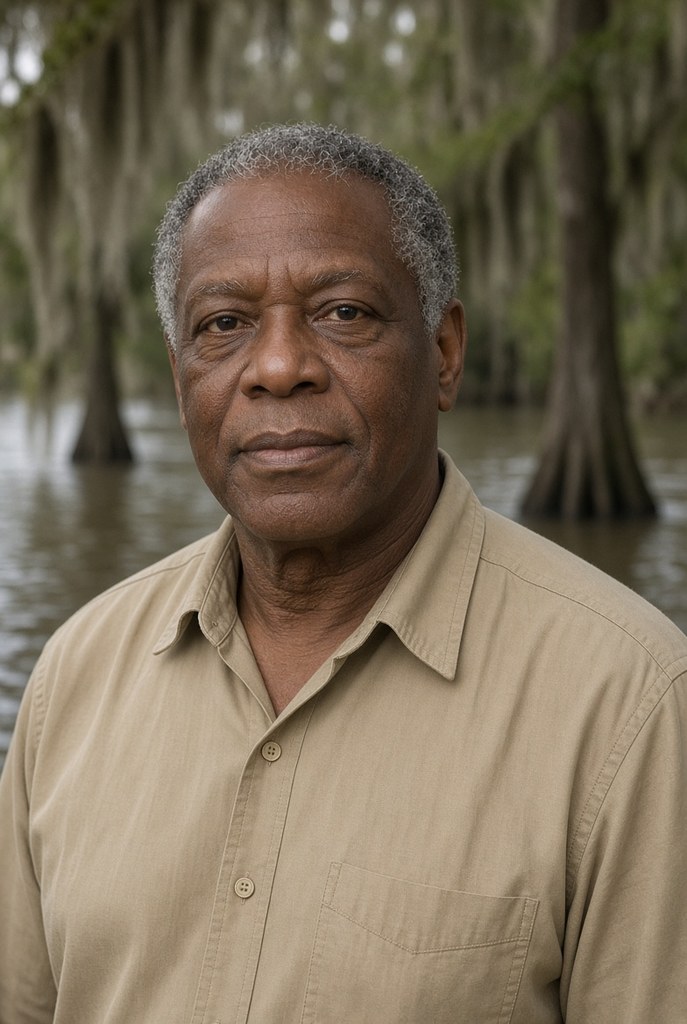
Bayou Curtis
 | |
| Era | The 2000s |
|---|---|
| Age | 60-69 |
| Home | Thibodaux, LA |
| Demographic | rural Black, Army retired, Southern conservative |
| Lean | Strong Republican |
| Race | black |
| Predecessor | Bayou Earl |
| Successor | Bayou Clarence |
Curtis is a retired Army master sergeant and a Missionary Baptist deacon in Louisiana's sugar parishes, and he is one of the few Black Republicans in the electorate. He condemns the federal response to Hurricane Katrina from his church pulpit but still votes Republican.
Who they stand for
In these years about one Black voter in ten votes Republican. Bush wins nine per cent of the Black vote in 2000 and eleven per cent in 2004, an increase driven by churchgoing conservatives in states with ballot marriage amendments, especially Ohio. Black Republicans are more likely than other Black voters to be veterans, small-business owners and church deacons in the rural Deep South. For a Black man of Curtis's generation, the Army and the church give him standing in the community. Colin Powell and Condoleezza Rice hold senior posts in the Bush administration, evidence Black Republican voters cite for their case.
Hurricane Katrina breaks up this group. Bush's support among Black voters collapses after August 2005, and Obama wins ninety-five per cent of the Black vote in 2008. Curtis stays with the Republicans.
Curtis is the second of three personas in this line. His predecessor, Bayou Earl, is never asked to explain his vote. His successor, Bayou Clarence, can point to Senator Tim Scott and to the established argument that the Democratic Party keeps Black voters dependent. Curtis carries both the anger of 2005 and his loyalty to the party, without yet finding an argument that reconciles them.
Playing to them
Curtis favours respect for the Army, support for the police, school vouchers, prayer in schools and a constitutional amendment on marriage. He also agrees with the view that the Democratic Party takes Black votes without giving anything in return. He is a Republican by conviction rather than grievance, and he expects a Republican president's actions to match his words. The failure of the Federal Emergency Management Agency after Hurricane Katrina in 2005 is the only thing that has ever turned him against the government, and a repeat of that failure would cost a Republican president more support than any white conservative persona.
He does not forgive an expansion of welfare, contempt for the church, or being treated as a token. A Democratic president can reach him only through the Army and the church, and never by appealing to race. Winning his support, together with the white evangelical personas, tends to cost the support of Greensboro Jasmine, Milwaukee Marcus and Sister Loretta, who share his moral views but not his party, and it also costs Berkeley Leonard and Protest Paige. Sister Loretta and Curtis often hear similar sermons on a Sunday, but they vote for opposite parties.
Where they live
The five states where Bayou Curtis makes up the largest share of the electorate in the 2000s:
- Washington DC
- Mississippi
- Louisiana
- Georgia
- South Carolina
Lineage
Bayou Earl → Bayou Curtis → Bayou Clarence
The same man on the same bayou, and what changes is that his position acquires an argument. Nobody from either party ever asks Earl why he votes Republican. Curtis criticises the federal government's Katrina response from the pulpit and votes Republican anyway. Clarence has Tim Scott and a complete argument that the Democrats are the real party of racism. The Republican Party has finally made his case for him, and he repeats it.