Bayou Earl
 | |
| Era | The Nineties |
|---|---|
| Age | 60-75 |
| Home | Napoleonville, LA |
| Demographic | rural Black, small business, Southern conservative |
| Lean | Strong Republican |
| Race | black |
| Successor | Bayou Curtis |
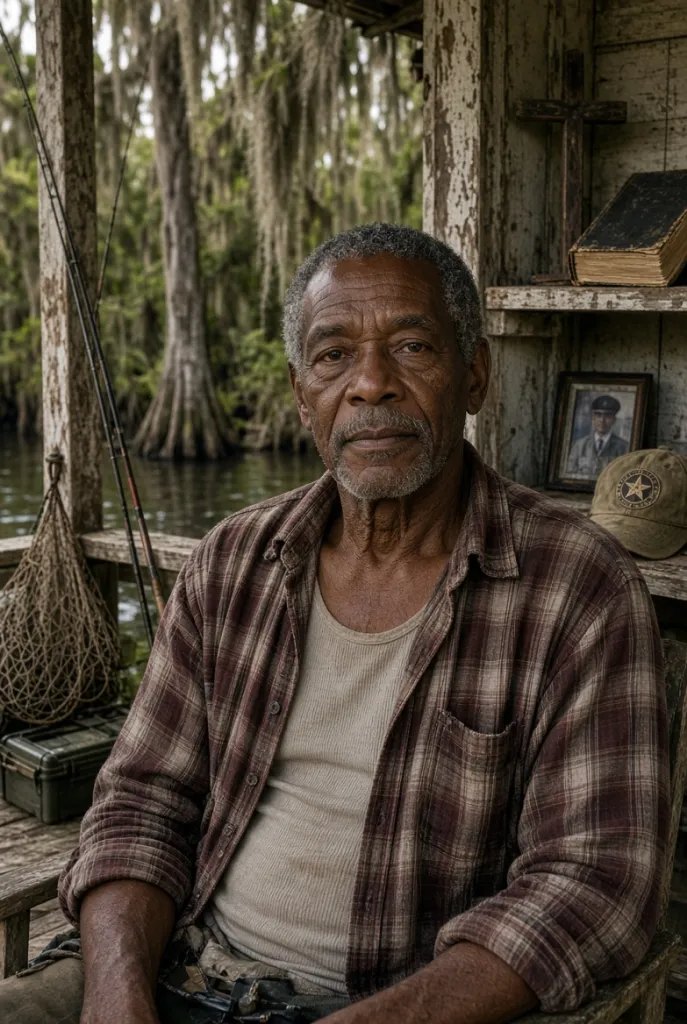
Earl is an elderly Black church deacon and retired tradesman in rural Louisiana who has voted Republican for decades. He is the strongest Republican voter among the cast's Black personas and one of the rarest, a conservative that neither party has tried to reach.
Who they stand for
Earl stands for the older, rural, churchgoing Black conservative of the Deep South, a small minority within the Black electorate. Through the 1990s, more than eight in ten Black voters supported the Democratic ticket, and the Republican remainder was concentrated among older men, veterans, small business owners and the most devout churchgoers. Earl belongs to that remainder, a Nixon-era Republican, a church deacon and a former small-business owner who blames the Great Society programmes of the 1960s for what happened to the families on his road. His views on crime, school vouchers and welfare are held much more widely in Black churches than the voting figures suggest. What makes Earl different is that he draws a partisan conclusion from those views and votes Republican because of them. The decade gives him few political champions. His main argument for staying Republican is that Clarence Thomas has sat on the Supreme Court since 1991 and Colin Powell has become a respected public figure. His successors, Bayou Curtis and Bayou Clarence, inherit his vote and, as the Republican Party builds a stronger case for Black conservatives, gain more reasons to hold it. Earl holds his position largely alone.
Playing to them
Earl responds to a president who treats him as an individual citizen with his own opinions rather than as part of a group with a single grievance. Tough sentencing, the death penalty, school vouchers for the parish's failing schools, gun rights, small-business tax relief, and a president who speaks in church about fathers and personal responsibility all win his support, because he already holds these views himself. He will not forgive racial quotas, an expansion of welfare, or a president who appears in public alongside Jesse Jackson. He cannot be won over by a new government programme.
Earl is close to being free to win, because winning him costs almost nothing among other Republican-leaning personas. Plano Kimberly, Cullman Eula and Lejeune Dustin already want the same things he does. What his support costs instead is support among other Black voters. Baltimore Kiana loses the welfare benefits that the reforms Earl supports would cut. Brownsville Deon is stopped on the street by the police officers Earl wants there in greater numbers. North Philly Arlene agrees with Earl about music and about fathers taking responsibility, but she will never agree with him about which party to support.
Where they live
The five states where Bayou Earl makes up the largest share of the electorate in the nineties:
- Mississippi
- Georgia
- Louisiana
- South Carolina
- Alabama
Lineage
Bayou Earl → Bayou Curtis → Bayou Clarence
The same man on the same bayou, and what changes is that his position acquires an argument. Nobody from either party ever asks Earl why he votes Republican. Curtis criticises the federal government's Katrina response from the pulpit and votes Republican anyway. Clarence has Tim Scott and a complete argument that the Democrats are the real party of racism. The Republican Party has finally made his case for him, and he repeats it.