Main Street Don
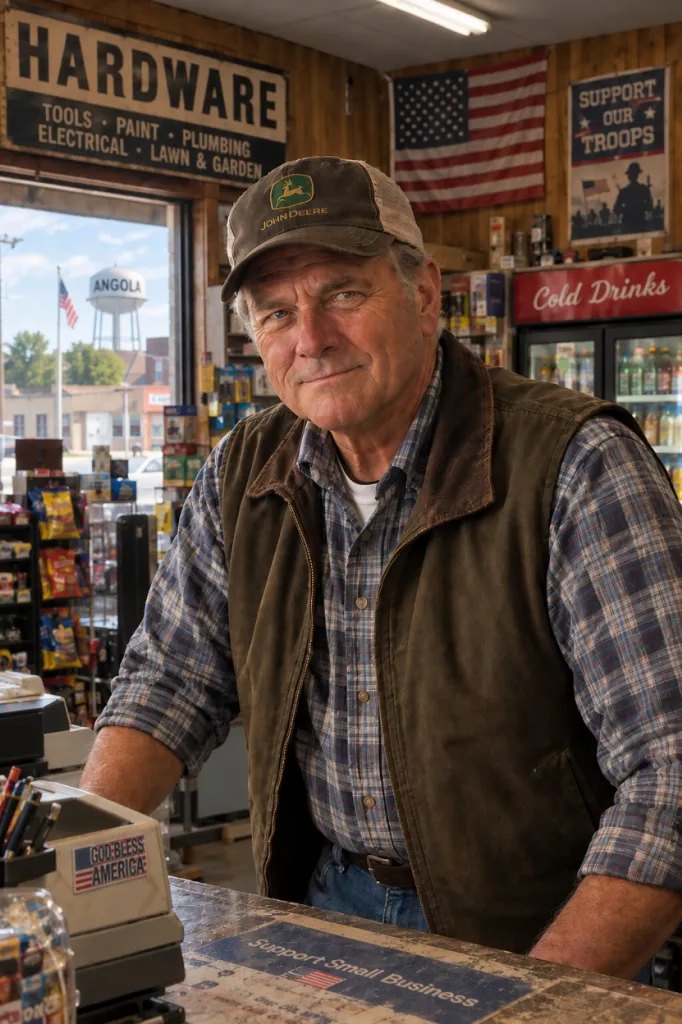 | |
| Era | The Nineties |
|---|---|
| Age | 58-72 |
| Home | McPherson, KS |
| Demographic | rural white, small business, civic |
| Lean | Swing voter |
| Race | white |
| Successor | Abilene Ray |
Don owns a Main Street hardware store in central Kansas. He is a Rotarian and a church board member, and he represents small-town Republicans who become more populist once a chain store opens near the town bypass.
Who they stand for
Walmart's expansion across the Plains states in the 1990s is the central economic fact of Don's decade. Studies by Kenneth Stone at Iowa State University found that a town gaining a Walmart saw its own trade increase while every nearby town lost trade, hardware stores usually the first local businesses to close. Don supports Bob Dole, the Republican senator from his state, who won Kansas by an eighteen-point margin in 1996. Through the decade, the Kansas Republican Party was divided between Governor Bill Graves's moderates and a religious right that won the State Board of Education and removed evolution from the state's teaching standards in 1999. Don belongs to the chamber of commerce and to neither faction. The federal estate tax is his main national concern, because a family-owned store counts as an estate, and the 1997 and 2001 tax bills raised the exemption and began phasing the tax out.
Don shares a political party with Greenwich Chip but very little else. Chip's support for free trade and for large corporations is part of what emptied the shops on Don's own street. Don's successors are Abilene Ray and Texas Tom, who keep his sense of grievance without his old-fashioned courtesy.
Playing to them
Don responds well to a president who has run a small business like his. He wants tax relief for small businesses, repeal of the estate tax, access to credit from a local bank rather than a large chain bank, and public recognition of his town's own institutions by name. He will not forgive being treated as though he lives in an unimportant part of the country, a trade deal explained by someone who has never had to meet a payroll, or a federal regulation written with only a much larger company in mind. He lives in a safely Republican state, so his own party's label wins him nothing. It is a candidate's record on small business that wins his support.
Winning him over with the estate tax also wins Greenwich Chip and Koreatown Daniel, but it loses Madison Steph. Winning him over with trade protection loses Chip and Scarsdale Ellen, but it keeps Ozark Wayne. Taking action against large chain stores loses Dot-Com Drew, who sees any move against a large company as unfair punishment. A Democrat can win him the way Clinton nearly did in Kansas in 1992, by talking about Main Street businesses rather than about party loyalty.
Where they live
The five states where Main Street Don makes up the largest share of the electorate in the nineties:
- North Dakota
- Kansas
- Nebraska
- South Dakota
- Iowa
Lineage
Main Street Don → Abilene Ray → Texas Tom
Small-town business Republicans, and what changes is that the courtesy goes and grievance replaces it. Don belongs to the Chamber of Commerce and votes Bob Dole, and is populist only when Walmart takes his trade. Ray belongs to the Chamber and the church, is Bush's base, and is civil to the liberals at Rotary. Tom is not civil: government is the problem, coastal elites run the country, and woke is the enemy. The town lost to Walmart, then his church's side lost on marriage, and anger is what remains. Swing, then strong Republican.