Edison Chen
 | |
| Era | The Modern Era |
|---|---|
| Age | 45-55 |
| Home | Sugar Land, TX |
| Demographic | Chinese-American, suburban, education-focused |
| Lean | Swing voter |
| Race | asian |
| Predecessor | Little Saigon Tuan |
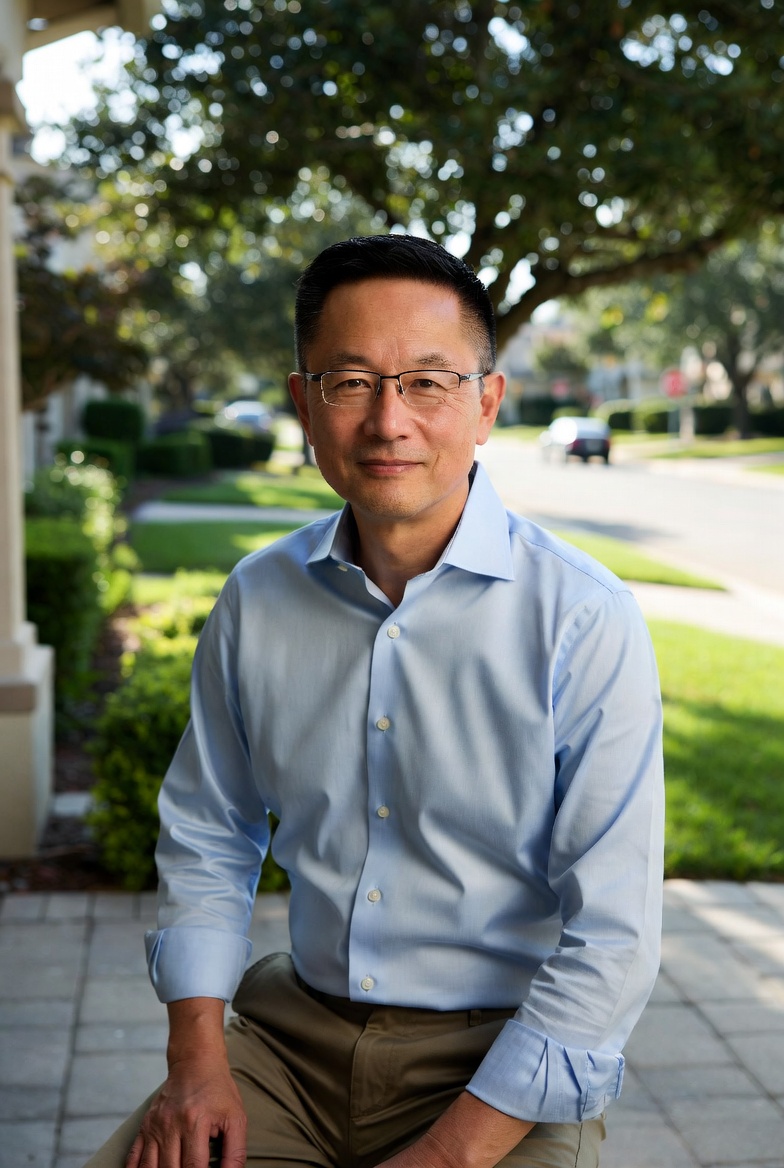
Chen is a pharmacist in his late forties, born in China and now living in the Houston suburbs. He is a swing voter who favours low taxes and merit-based admissions, but also supports abortion rights and dislikes the tone he hears from Republicans.
Who they stand for
Chen represents the Asian-American swing voter of the Sun Belt suburbs. This group is concentrated in places such as Fort Bend County outside Houston, which turned Democratic in the 2016 and 2018 elections as its Asian and Hispanic population grew. Chinese-Americans are the least Democratic of the large Asian-American groups and the most divided within themselves, and the issues that divide them are the issues that shape Chen's politics. The Students for Fair Admissions case against Harvard, filed in 2014 and won by the plaintiffs in 2023, pushed him towards the Republicans. The anti-Asian attacks of the pandemic years, the use of the term 'China virus', and a 2023 Texas bill to bar Chinese citizens from buying land pushed him back towards the Democrats. The Asian-American vote as a whole moved towards the Republicans in 2024, and Chen moved with it, though not entirely.
Koreatown Daniel's politics were shaped by the Los Angeles riots, and Little Saigon Tuan's by the fall of Saigon. Chen has no comparable historical event behind his politics. His politics are shaped instead by his two children and by college admissions offices.
Playing to them
Chen supports a president who funds gifted programmes and STEM education, backs charter schools and school vouchers, ends race-conscious college admissions, and leaves the decision on abortion to the family and the doctor. He does not forgive a racial quota, a new diversity office, a defence of legacy admissions, or a remark about China taken as an attack on Chinese-Americans. A national ban on abortion loses his support just as surely as a quota does. He shows how a single voter can be won by one party on one issue and by the other party on a different issue.
Winning his support on college admissions also wins the support of Bayou Clarence, but loses Atlanta Andre and Brooklyn Jamal, who see the same policy as a rollback of civil rights. Winning his support with school vouchers loses the support of Detroit Denise and of the teachers whom Andre represents. Winning his support on abortion rights keeps Bay Area Priya and College Chloe, but loses Heartland Hank, Iowa Martha, and Texas Tom. A president who wants both sides of Chen's politics must give up half the support of each party.
Where they live
The five states where Edison Chen makes up the largest share of the electorate in the modern era:
- Hawaii
- California
- Nevada
- New Jersey
- Washington
Lineage
Koreatown Daniel → Little Saigon Tuan → Edison Chen
Asian small-business owners, for low taxes and against affirmative action in all three decades. For Daniel and Tuan the politics come from one event each: the Los Angeles riots for Daniel, the fall of Saigon for Tuan. For Chen there is no such event, and his politics are about his children's university admissions. He has moved from lean Republican to swing because the Republicans still agree with him on admissions but now talk about immigrants in a way that includes him, and because he supports abortion rights.