Brownsville Deon
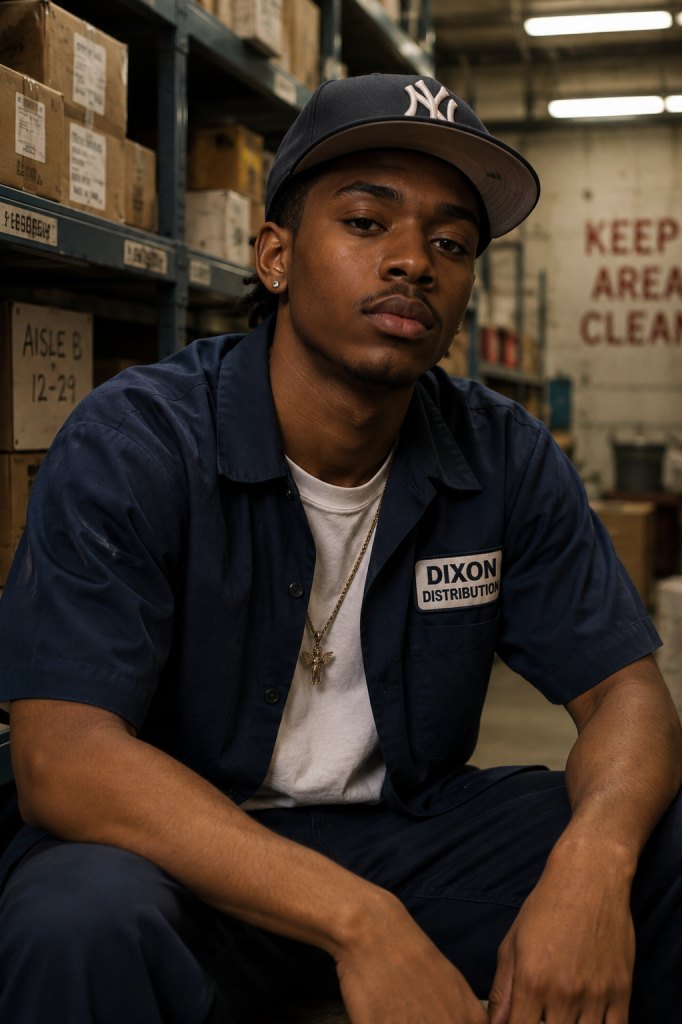 | |
| Era | The Nineties |
|---|---|
| Age | 18-25 |
| Home | Brownsville, Brooklyn, NY |
| Demographic | urban Black, inner city, out of school |
| Lean | Swing voter |
| Race | black |
| Successor | Milwaukee Marcus |
Deon is a young Black man in Brooklyn's poorest neighbourhood, out of school, working off the books and carrying a drug charge. He is the voter the decade's crime policy targets, and because he does not vote, no party has claimed him.
Who they stand for
Deon stands for the young Black men of the inner city during the years of stop-and-frisk policing and the disparity between crack and powder cocaine sentencing. They are among the most heavily policed and least politically courted people in the country. New York's Rockefeller drug laws set mandatory minimum sentences that filled the state's prisons, the 1994 federal crime bill paid for a hundred thousand additional police officers, and Mayor Giuliani's police department, through its Street Crime Unit, stopped tens of thousands of young men on the street. The torture of Abner Louima by police officers in 1997 and the shooting of Amadou Diallo in 1999 are the defining events of Deon's political life, and the acquittal of the officers who shot Diallo in 2000 is its lesson. Voter turnout among men of Deon's age and race was the lowest of any group in the country, and no party competed for his vote. His successors show how this changes. Milwaukee Marcus votes occasionally and without much faith in the process. Brooklyn Jamal is recruited by a university programme and a nonprofit organisation and becomes a political organiser; a university and a nonprofit reached Jamal, and none reached Deon.
Playing to them
Deon can be reached by policy but is rarely moved to vote, and is better understood as a measure of policing policy than as a reliable vote. He responds to a president who ends the sentencing disparity between crack and powder cocaine, loosens drug laws generally, orders an investigation into a police killing, or states publicly that stop-and-frisk amounts to harassment. He also responds to funding for jobs and to hip hop being treated as music rather than as a threat to public order. He is lost permanently by an increase in policing, tougher sentencing laws, a new crime bill, or a president photographed alongside Mayor Giuliani. He does not respond to economic arguments except ones about the cost of rent.
A president who acts to win Deon's support loses the support of Bay Ridge Kevin, whose job as a police officer is the institution Deon opposes, and of Bensonhurst Rosalie, to whom Deon represents the disorder she votes against. Bayou Earl and North Philly Arlene, who both want more police officers in their own neighbourhoods, also move away from a president who wins Deon. Baltimore Kiana, Castro Marty and Madison Steph come along with Deon at no additional cost.
Where they live
The five states where Brownsville Deon makes up the largest share of the electorate in the nineties:
- Mississippi
- Louisiana
- Georgia
- Maryland
- South Carolina
Lineage
Brownsville Deon → Milwaukee Marcus → Brooklyn Jamal
The young Black man, who goes from ignoring politics to organising, because universities and nonprofits began recruiting young Black men in the 2010s. Deon does not vote and is consulted by nobody. Marcus is cynical and votes when he votes. Jamal is admitted to a university and hired by a nonprofit, becomes a community organiser, and writes about Black Lives Matter in a way Deon never would have. He is Pete's opposite. Institutions shut the young white man out and recruit the young Black man, and both become political because of it.