Tempe Kurt
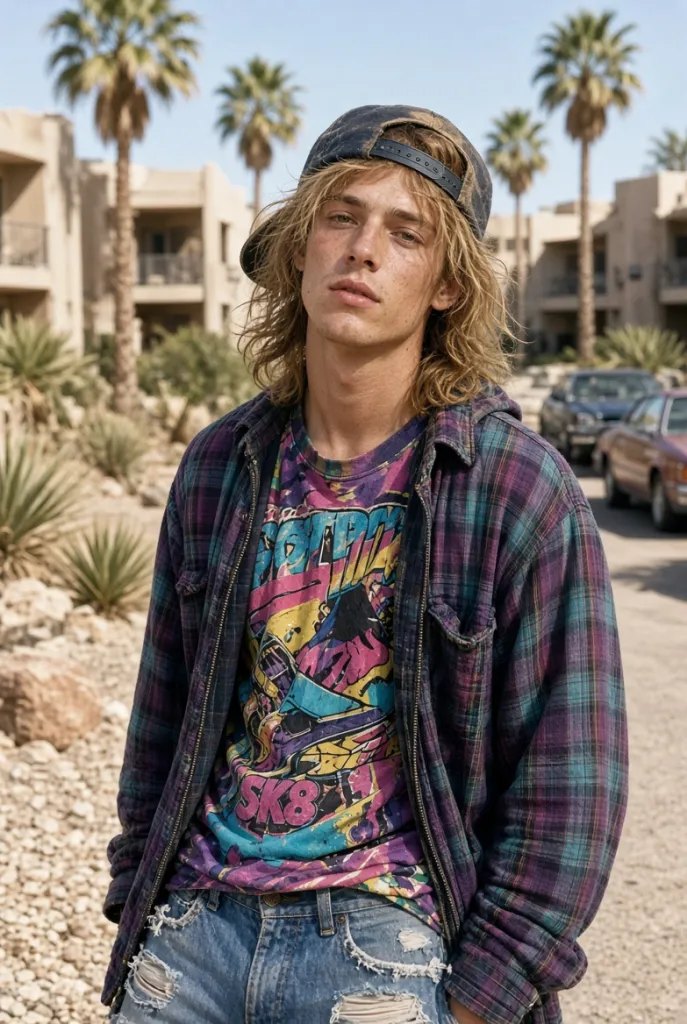 | |
| Era | The Nineties |
|---|---|
| Age | 20-30 |
| Home | Tempe, AZ |
| Demographic | young white, no career track, city |
| Lean | Swing voter |
| Race | white |
| Successor | Drywall Josh |
A man in his twenties in Tempe who works in a shop, plays in a band, and is barely part of the electorate. He is the first of three personas for young white men without a settled career, followed by Drywall Josh and Disconnected Dylan.
Who they stand for
Turnout among voters under 25 fell to its lowest recorded level in 1996. Young white men who did not belong to a union, a church or a college were among the hardest voters for either party to reach, because none of the organisations that usually contact voters had any link to them. Kurt weighs heaviest in Arizona, Vermont, Utah, Oregon and Colorado. Rock the Vote and MTV's Choose or Lose campaign were both built to reach him, as was Bill Clinton's appearance playing the saxophone on the Arsenio Hall Show in 1992. Ross Perot drew more of the under-30 vote in 1992 than either party expected. Ralph Nader did best among young voters in the 2000 election.
The 1990s boom separates Kurt from Drywall Josh and Disconnected Dylan, who follow him. By 2000, unemployment had fallen to nearly four per cent, and a man without a college degree could still find a job, and later a mortgage. The personas who follow him face a harder economy and cannot do the same. Kurt Cobain's death in 1994 was the defining event of Kurt's decade. The war on drugs is the political issue he notices most; he pays little attention to others.
Playing to them
He is more receptive to candidates who present themselves as political outsiders, such as Ross Perot in 1992, John McCain's 2000 primary campaign, or Ralph Nader. A president reaches him by appearing where he already is, such as MTV or a late-night talk show, without moralising once there. He responds well to a president who does not lecture him about drugs, does not campaign against his music, and does not call for national service. He does not forgive a president who is too earnest, who addresses him only as a demographic, or who cracks down on marijuana. He has no strong views on taxes, guns or abortion. A president rarely loses his support over those issues, but it is very hard to get him to vote.
A president whose irreverence amuses Kurt loses the support of Plano Kimberly and Cullman Eula. A soft line on drugs loses the support of Bay Ridge Kevin, a police officer who arrests people for drugs. Mocking yuppies to appeal to Kurt annoys Dot-Com Drew and Country Club Chip. Madison Steph is the same age as Kurt but holds the opposite politics. The campus-left message that appeals to her is exactly what he mocks.
Where they live
The five states where Tempe Kurt makes up the largest share of the electorate in the nineties:
- Arizona
- Vermont
- Utah
- Oregon
- Colorado
Lineage
Tempe Kurt → Drywall Josh → Disconnected Dylan
Young white men without a plan, and what differs is whether a man like that can still build a life in that decade's economy. In the nineties he can: Kurt drifts through his twenties and still ends up with a job, a mortgage and a family, and he is probably Dylan's father. In the 2000s the housing boom pays Josh well for unskilled work until 2008. In the 2010s Dylan gets nothing: no route into university, and the jobs that once paid a man of average ability are gone, so he works in a warehouse and ignores politics. He and Pete are both shut out. Pete becomes more political because of it and Dylan becomes less.